

Listing photographs help buyers decide whether to visit. Their job is to communicate the home clearly enough that the right people recognize a possible fit. Bright, well-composed pictures can make that easier. Misleading pictures can create a showing that starts with disappointment.
Prepare for photography as a planned appointment, not a last-minute cleaning deadline. Consider natural light, room arrangement, exterior conditions, privacy, and the story the photo sequence tells. The best image set helps someone understand what the property actually offers.
Plan around the home rather than a generic schedule
Different parts of a property receive useful light at different times. A front exterior facing one direction may look better at a different hour from the rear patio. Ask your photographer about orientation, weather, shadows, and the important features you want to show.
Interior photography may use lighting and exposure techniques that differ from an ordinary phone snapshot. Let the professional recommend whether blinds should be adjusted and which lights should be on. Before the appointment, replace burned-out bulbs where safe, clean fixtures, and avoid glaring differences in bulb color within the same room.
Do not assume more brightness is always better. A window blown out into white can hide a meaningful view. Harsh lighting can distort color. The purpose is a readable image, with surfaces and features that resemble what visitors will encounter.
Make a room ready before the camera arrives
Finish cleaning and decluttering in advance. Remove bins, personal paperwork, toiletries, excess cords, and temporary equipment. Straighten bedding and curtains. Move vehicles when appropriate so that the exterior and driveway can be seen without obstruction.
Inspect mirrors, screens, and reflective surfaces for private information or people visible in reflections. Photographs may be copied, shared, and remain online after the sale. A document that seems harmless on a counter can become readable when an image is enlarged.
Walk outside too. Clear the front path, address obvious yard debris, and arrange outdoor furniture so buyers understand usable space. Seasonal conditions may limit what can be shown. Use current, accurate images and identify older seasonal photographs when appropriate under local listing rules.
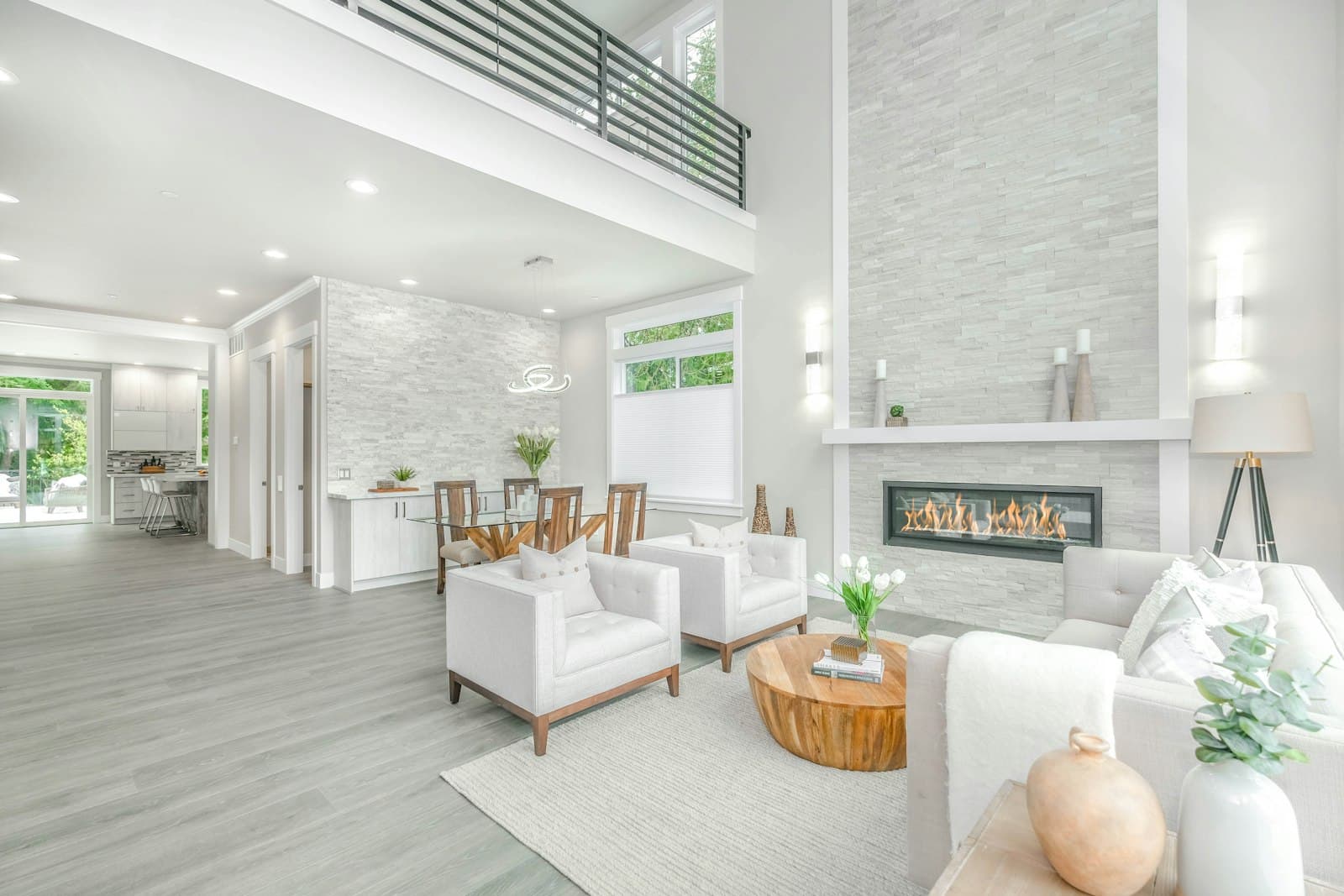
Show layout as well as attractive details
A close-up of a faucet can be attractive, but buyers also need to understand where the kitchen sits and how the main rooms connect. Prioritize images that explain the floor plan, room proportions, and important transitions.
Include ordinary rooms that materially affect a buyer's decision. Omitting every bathroom or avoiding an entire lower level can create questions. You do not need to photograph every closet, but the image set should not imply that a significant area does not exist.
If you include a floor plan, confirm its measurements, labels, and limitations. A diagram is useful when it helps someone understand circulation. It becomes harmful if it mislabels an unfinished area, invents a bedroom, or suggests accuracy that has not been verified. Ask your provider how measurements were obtained and what disclosures are appropriate.
Distinguish enhancement from alteration
Adjusting exposure or color can help a photograph represent a room accurately. Removing a permanent utility pole, concealing damage, adding a nonexistent view, or changing the home's physical features can mislead buyers. Review images before publication and ask about edits you do not understand.
Virtual staging deserves special attention. Adding digital furniture can illustrate a possible arrangement, but buyers should know the furniture is not physically present. Label staged images clearly and follow the rules of the listing service and websites involved. When useful, provide an unstaged counterpart so that buyers can judge the actual space.
Do not use artificial intelligence to repair the property in a photograph. If the floor is damaged, an image showing an intact floor creates a false expectation. If the yard is unfinished, digitally adding completed landscaping can imply an improvement that has not happened. Marketing should help buyers see potential without confusing potential with present condition.
Select the first image thoughtfully
The lead photograph should clearly introduce the property and work at a small size. Often that is an exterior image; some properties may be better introduced by a distinctive interior or view. Consider local rules and the buyer's need to identify what is being offered.
Avoid an image that requires a long explanation to make sense. A dramatic detail may be beautiful while telling the buyer almost nothing about the home. Compare candidate lead images on a phone and ask what each communicates in a few seconds.
Then sequence the photographs in a logical journey. Move through primary living spaces, bedrooms, bathrooms, other important areas, and exterior features. A buyer should not have to mentally jump between unrelated corners of the property to understand the layout.
A practical example
A small living room is photographed with an extremely wide lens that makes it appear much deeper than it is. The image attracts interest, but visitors repeatedly say the room is smaller than expected. The problem is not that the home changed. The marketing established an inaccurate reference point.
A more natural composition, a useful floor plan, and appropriate furniture can help buyers evaluate the room before scheduling. Fewer disappointed visitors may be more useful than a larger number of appointments built on the wrong expectation. Traffic alone does not measure photograph quality.
Review the finished set before launch
Check that photographs belong to the correct property, private information is removed, room labels are accurate, and material features are not distorted. Confirm your rights to use the images and the photographer's permitted distribution arrangements. Do not assume paying for a service gives unlimited ownership of every image.
Compare the photos with an in-person walkthrough. Ask whether someone visiting tomorrow would recognize the home and understand its condition. If an image would require you to explain that it looks very different in real life, investigate why.
Good photography creates a dependable introduction. It helps buyers choose a showing for the right reasons and gives you a stronger starting point for the conversations that follow.
Ask a trusted person to review the sequence without your explanation. Can they identify the main entrance, understand the primary living areas, and recognize what is permanent versus staged? Their questions can reveal missing context before publication. Resolve those gaps with accurate images or captions rather than expecting visitors to reconstruct the layout themselves.
Sources and further reading
This lesson explains how home sales generally work in the United States and is not legal advice. Your contract, state and local law, and listing service rules decide the specifics, so check them with your broker, attorney or closing provider.